-
Liutang Town Industrial Park, Liucheng County, Guangxi

Food Grade Phosphates: Global Regulations, Core Functions & Application Guide
Published: April 2026 | Last Updated: April 2026 By Goway Chemical Technical Team
Certifications: Food Chemicals Codex (FCC) | ISO 9001:2015 | Halal Certified | Kosher Certified
When evaluating food grade phosphates for your production line, the challenge is rarely finding a supplier. It is finding one who can simultaneously satisfy your regulatory compliance requirements across multiple export markets, deliver consistent batch-to-batch quality, and provide the technical application guidance your formulation team actually needs.
This guide is built to answer those questions in full — from the chemistry of how phosphates function in food systems, to the precise regulatory thresholds that govern their use in the United States, European Union, China, and international markets.
It is written for the professionals who do not have time to piece together fragmented information: food formulators optimizing water retention in sausage lines, procurement managers qualifying new suppliers for EU market entry, QA teams verifying that heavy metal limits in your COA match what the regulation actually requires, and R&D engineers exploring phosphate blends for the next generation of clean-label products.
By the end of this guide, you will have a working knowledge of food grade phosphate functionality, the regulatory landscape across your target export markets, and a practical framework for evaluating and selecting suppliers with the documentation and quality infrastructure to back up their claims.
What This Guide Covers
This guide is organized into six sections:
- Section 1: Global Regulatory Framework — FDA, EU, China GB Standards, and Codex Alimentarius. For each jurisdiction, we identify the specific regulations, maximum usage levels, and purity specifications that food grade phosphate buyers must verify with their suppliers.
- Section 2: The 10 Core Functions of Food Grade Phosphates — The science of how phosphates work in food systems, grounded in peer-reviewed research.
- Section 3: Food Grade Phosphate Products — Detailed profiles of STPP, SAPP, SHMP, TSPP, TCP, and food grade phosphoric acid, with specifications, applications, and supplier selection criteria for each.
- Section 4: Application Guide by Industry — Practical guidance for meat, seafood, bakery, dairy, beverage, and canned food processing, with formulation reference tables and compliance notes.
- Section 5: How to Select the Right Food Grade Phosphate Supplier — A five-dimension evaluation framework for procurement professionals.
- Section 6: Documentation & Compliance — What your supplier should provide, market by market, and how to verify it.
About Goway Chemical — Your Food Grade Phosphate Partner
Before diving into the technical content, it is worth establishing who is providing this guide — and why it matters.
Goway Chemical is a manufacturer and supplier of industrial and food grade phosphates, with production capacity exceeding 200,000 metric tons per year across multiple phosphate product lines. Our food grade phosphate portfolio covers the full range of sodium, calcium, and potassium phosphates used in food processing applications worldwide — including STPP, SAPP, SHMP, TSPP, TCP, and food grade phosphoric acid.
Our food grade production operates under a comprehensive quality management system aligned with Food Chemicals Codex (FCC) specifications, supported by ISO 9001:2015 certification, Halal certification, and Kosher certification. Every production batch is accompanied by a Certificate of Analysis (COA) generated from actual testing, not interpolated from reference standards. Full documentation packages — including COA, SDS, TDS, and relevant certificates — are available to verified buyers within one business day.
This guide draws on our operational experience serving food processors across North America, Europe, Southeast Asia, the Middle East, and China — and on the scientific literature that underpins how phosphates function in food systems.
Section 1: Global Regulatory Framework for Food Grade Phosphates
Food grade phosphates are regulated in every major food market, but the specific rules, permissible compounds, maximum usage levels, and labeling requirements differ materially. For suppliers and buyers operating across multiple jurisdictions, understanding these differences is not optional — it is the foundation of compliant sourcing.
This section provides a structured comparison of the regulatory frameworks in the United States, European Union, China, and under the Codex Alimentarius international standard. The goal is not to replace legal counsel or regulatory advisors, but to give procurement and QA professionals a working reference that surfaces the key questions to ask of any phosphate supplier.
How to Read This Section
For each jurisdiction, we identify:
- The governing authority and primary regulation
- The specific phosphate compounds covered
- Maximum usage levels, where applicable
- Purity specifications
- Labeling and documentation requirements
- What buyers should verify with their supplier
A quick-reference comparison table is provided at the end of this section.
United States — FDA and USDA Framework
The United States operates a dual-agency system for food ingredients, with jurisdiction divided between the Food and Drug Administration (FDA) and the United States Department of Agriculture (USDA).
FDA Jurisdiction
The FDA regulates food grade phosphates under the Federal Food, Drug, and Cosmetic Act (FD&C Act). Food grade phosphates used in foods under FDA jurisdiction — including processed foods, beverages, dairy products, and most food service applications — must comply with relevant sections of 21 CFR (Code of Federal Regulations) Title 21.
Food Chemicals Codex (FCC): The primary purity standard for food grade chemicals in the United States. FCC monographs specify identity requirements, purity criteria (including limits on heavy metals such as lead, arsenic, cadmium, and mercury), and assay requirements for each phosphate compound. Suppliers marketing food grade phosphates in the US market should be able to provide COA data demonstrating compliance with the relevant FCC monograph. Goway Chemical’s food grade phosphates are produced to FCC specifications as a baseline quality standard.
GRAS Status: Most phosphate compounds used in food are classified as GRAS (Generally Recognized As Safe) under 21 CFR. This classification means the compound has a history of safe use in food prior to 1958, or has been evaluated by qualified experts and found to be safe under intended conditions of use. GRAS is not a license to use without limit — usage levels are governed by 21 CFR Part 173 (direct food additives) and relevant product-specific regulations.
Specific Regulatory References for Common Phosphates:
- Sodium Tripolyphosphate (STPP), E451i: 21 CFR 173.370 provides for use of STPP in RTE (ready-to-eat) cooked sausages at levels not exceeding 0.5% by weight of the finished product. Additional uses in poultry and seafood processing are governed by specific product standards.
- Sodium Hexametaphosphate (SHMP), E452i: 21 CFR 173.385 covers SHMP for use as a sequestrant and dispersing agent in foods at levels up to 0.5% by weight.
- Sodium Acid Pyrophosphate (SAPP), E450i: 21 CFR 173.360 covers use in baked goods and baking mixes.
- Tricalcium Phosphate (TCP), E341iii: 21 CFR 73.275 covers use as a color additive (calcium phosphate) in foods.
USDA Jurisdiction
The USDA Food Safety and Inspection Service (FSIS) regulates phosphate use in meat and poultry products under the Federal Meat Inspection Act and Poultry Products Inspection Act. Phosphate use in USDA-inspected products is governed by 9 CFR:
- 9 CFR 424.21 authorizes the use of sodium phosphates in meat and poultry products, with specified maximum levels.
- For cooked sausages, USDA regulations permit sodium phosphate addition at levels not exceeding 0.5% of the finished product weight.
- Phosphate use in injected meats (such as enhanced pork loins or beef steaks) is permitted under specific injection brines that must be declared on the label.
Key takeaway for buyers: If you are sourcing phosphate for US market meat or poultry products, your supplier must provide documentation demonstrating compliance with both the relevant FDA CFR provision and any applicable USDA regulation. The supplier’s COA should reference the specific regulatory provision under which the phosphate is authorized.
European Union — EFSA and REACH
The European Union operates one of the most comprehensive food additives regulatory frameworks in the world, governed primarily by Regulation (EC) No 1333/2008 on food additives and its associated implementing regulations.
The E-Number System
Under EU law, food additives are identified by an E-number — a safety-assessed code that replaces complex chemical names on ingredient labels. The phosphate family uses the following E-number ranges:
- E338 — Phosphoric acid
- E450 — Diphosphates (disodium diphosphate, trisodium diphosphate, tetrasodium diphosphate, calcium diphosphate, etc.)
- E451 — Triphosphates (pentasodium triphosphate, pentapotassium triphosphate)
- E452 — Polyphosphates (sodium hexametaphosphate, calcium polyphosphate, potassium polyphosphate, sodium calcium polyphosphate)
- E341 — Phosphates of calcium (monocalcium phosphate, dicalcium phosphate, tricalcium phosphate)
Authorised Uses and Maximum Limits
Regulation (EC) No 1333/2008 establishes which food additives may be used in which foods, and at what maximum levels. These levels are set by the European Food Safety Authority (EFSA) based on safety assessments that establish an Acceptable Daily Intake (ADI) — the amount of a substance that can be consumed daily over a lifetime without appreciable health risk.
ADI values for key phosphates:
- Phosphoric acid (E338) and phosphates (E450–E452): EFSA has established a group ADI of 40 mg phosphorus/kg body weight/day for phosphates, expressed as phosphorus. This ADI covers all phosphate compounds used as food additives.
Phosphate usage levels in EU-authorized food applications are specified in Annex II to Regulation (EC) No 1333/2008, organized by food category. Key examples include:
- Processed meat products: typically permitted at levels of 5,000 mg/kg or less, depending on specific product category
- Cheese and cheese products: specific limits vary by product type
- Beverages: specific limits apply depending on product category
Commission Regulation (EU) No 231/2012 establishes specifications for food additives — including purity criteria, test methods, and criteria for lead, arsenic, cadmium, mercury, and other contaminants. Food grade phosphates sold into the EU market must meet these specifications.
REACH Registration
For phosphate substances used in industrial or food contact applications and exported to the EU in quantities exceeding 1 tonne per year, suppliers must hold REACH registration (Registration, Evaluation, Authorisation and Restriction of Chemicals, Regulation EC No 1907/2006) with the European Chemicals Agency (ECHA). While REACH is primarily an industrial chemicals regulation, its implications for EU buyers sourcing from non-EU manufacturers include:
- The EU importer of record bears responsibility for REACH compliance
- Non-EU manufacturers selling directly into the EU must have an Only Representative (OR) registered under REACH to take on importer compliance obligations
- Goway Chemical holds REACH registration for applicable phosphate export substances, enabling EU customers to source directly without establishing a separate OR arrangement
FAMI-QS for Feed Phosphates
If you are sourcing phosphate for animal feed applications — such as dicalcium phosphate (DCP) or monocalcium phosphate (MCP) for premix or compound feed — the applicable standard is FAMI-QS (the European Feed Additive and Premixture Quality System), not the food additive regulations above. See Section 1 in GW-2026-004 (Goway’s Quality Certifications page) for a detailed explanation of FAMI-QS requirements and what they mean for feed phosphate procurement.
China — GB Standards and the National Health Commission
China’s food additive regulatory system is administered by the National Health Commission (NHC) and the State Administration for Market Regulation (SAMR) under the framework of the Food Safety Law of the People’s Republic of China.
GB 2760-2024 — Food Additive Use Standard
GB 2760-2024 — Food Safety National Standard: Uses of Food Additives — is China’s primary regulation governing which food additives may be used in which foods, and at what maximum levels. The standard, which took effect on February 8, 2025 (superseding the 2014 version), lists approved food additives by functional category and specifies their:
- Permitted food categories
- Maximum usage levels (expressed as mg/kg or mg/L, or as maximum residue limits in specific food matrices)
- Special usage requirements (such as pre-market safety assessment conditions)
Phosphate food additives in GB 2760-2024 are listed under functional category 15 (Food Additives According to Their Main Functions), subclass 1501 (Phosphates). The standard specifies permitted phosphate compounds, the foods in which each may be used, and maximum usage levels. Key points for phosphate buyers include:
- GB 2760-2024 uses a positive list approach — only listed compounds in listed applications may be used
- Maximum usage levels are set by food category, not by phosphate compound alone
- Combination use of multiple phosphates in the same food may be subject to combined maximum levels
Important note for buyers transitioning from GB 2760-2014: The 2024 revision made specific changes to phosphate provisions. Your supplier’s documentation should reference the 2024 standard, not the 2014 version. Goway’s food grade phosphate product documentation is aligned with GB 2760-2024 specifications.
GB 2762-2022 — Contaminant Limits
GB 2762-2022 — Food Safety National Standard: Maximum Levels of Contaminants in Foods — establishes limits for heavy metals and other contaminants in food products. While this standard applies to finished food products rather than food ingredients directly, the contaminant limits in finished products set the contamination threshold that ingredient specifications must support. For food grade phosphates, relevant contaminant limits include:
- Lead (Pb) in the finished food product
- Arsenic (As)
- Cadmium (Cd)
- Mercury (Hg)
Your supplier’s COA should include heavy metals testing data demonstrating that their phosphate product meets the purity requirements necessary for your finished product to comply with GB 2762 contaminant limits in its target food applications.
GB 5009.256-2016 — Phosphate Testing Method
GB 5009.256-2016 is the national standard test method for determining multiple phosphate species in foods. While this is primarily a reference for food testing laboratories, understanding its existence signals that Chinese regulatory enforcement is supported by standardized detection methodology — and that your supplier’s product should be produced to specifications that can pass this type of testing when incorporated into finished foods.
Food Production License (SC)
Food ingredients sold in China must come from manufacturers holding a Food Production License (SC license) under the Food Safety Law. The license scope specifies which product categories the manufacturer is authorized to produce. For phosphate ingredients, this means verifying that your supplier holds a valid SC license covering the specific phosphate products you are sourcing, and that the license scope matches your intended food applications.
Codex Alimentarius — The International Baseline
The Codex Alimentarius Commission (CAC) — a joint FAO/WHO body — establishes international food standards that serve as reference points for national regulations and international trade. While Codex standards are not legally binding, they carry significant weight in international trade disputes and are explicitly referenced in World Trade Organization (WTO) agreements as the benchmark for food safety and quality.
JECFA Safety Assessments
The Joint FAO/WHO Expert Committee on Food Additives (JECFA) conducts scientific safety assessments of food additives, including phosphates. JECFA establishes:
- Acceptable Daily Intake (ADI) values — the cornerstone of international food additive safety
- Maximum Use Levels for specific food categories
- Specifications for identity and purity
For phosphates, JECFA has established a group ADI of 40 mg/kg body weight/day (expressed as phosphorus), which is consistent with the EFSA group ADI. This provides a scientifically grounded international baseline that national regulators use as input to their own safety assessments.
Codex Standards for Food Additives (CXS 192-1995)
CXS 192-1995 — General Standard for Food Additives — provides the international reference for food additive use. National regulations in the US, EU, China, and other major markets generally align with or are more restrictive than the Codex provisions, but Codex alignment is an important indicator of a supplier’s ability to serve multiple export markets.
Regulatory Comparison — Quick Reference Table
| Dimension | USA (FDA/USDA) | European Union (EFSA) | China (NHC/SAMR) | Codex Alimentarius |
|---|---|---|---|---|
| Primary Regulation | 21 CFR / 9 CFR | Reg (EC) 1333/2008 | GB 2760-2024 | CXS 192-1995 |
| Compound Identification | FCC monograph | E-number system | GB 2760-2024 list | INS number + name |
| ADI (Phosphates) | GRAS; ADI not separately established | 40 mg P/kg bw/day (group) | GB 2760-2024 specified limits | 40 mg P/kg bw/day |
| Max Levels | CFR-specified by product | Annex II to Reg 1333/2008 | GB 2760-2024 by food category | CXS 192-1995 Annex |
| Purity Standard | FCC | EU 231/2012 | GB standards (various) | JECFA specifications |
| Labeling | Common or usual name | E-number on ingredient list | Chinese standard name | INS number or name |
| Registration | GRAS self-affirmation or FDA notification | Food additive pre-market approval | SC license for domestic sales | N/A |
| Key Heavy Metals | Lead, arsenic, cadmium, mercury (FCC) | Lead, arsenic, cadmium, mercury (231/2012) | Lead, arsenic, cadmium, mercury (GB 2762) | Lead, arsenic, cadmium, mercury |
Section 2: The 10 Core Functions of Food Grade Phosphates
Understanding the science of how phosphates function in food systems is essential for making informed formulation decisions and evaluating whether a supplier’s product will perform as expected in your specific application.
This section provides a chemistry-grounded explanation of the 10 primary functional roles that food grade phosphates play in food processing. The functional chemistry is drawn from peer-reviewed research, including the comprehensive review by Lampila (2013) published in the Annals of the New York Academy of Sciences (PMID: 24033359), which remains a foundational reference for phosphate functionality in muscle foods and broader food applications.
From Chemistry to Function — The Phosphate Ion Advantage
Food grade phosphates are salts of phosphoric acid (H₃PO₄). When dissolved in water, they dissociate into the phosphate anion (PO₄³⁻) and associated metal cations (sodium, calcium, potassium). The specific phosphate species present in solution — orthophosphate (PO₄³⁻), pyrophosphate (P₂O₇⁴⁻), tripolyphosphate (P₃O₁₀⁵⁻), or polyphosphate (longer chains) — depends on the pH of the solution and the specific phosphate compound.
This speciation chemistry is what gives phosphates their functional versatility:
- Short-chain phosphates (orthophosphates, pyrophosphates) are effective at pH modification and have strong calcium-sequestering capacity at low pH.
- Medium-chain phosphates (tripolyphosphates) excel at protein interaction and water binding in meat systems.
- Long-chain phosphates (hexametaphosphates, glassy polyphosphates) have the highest sequestrant capacity and are most effective at metal ion chelation across a broader pH range.
The ability to select the right phosphate compound — or the right blend — for a specific application is therefore not arbitrary. It is chemistry.
1. Water Binding and Moisture Retention
Chemical mechanism: The most commercially important function of phosphates in food processing. In meat and poultry systems, phosphates increase water holding capacity (WHC) and improve texture through two primary mechanisms:
- pH elevation: Phosphates raise the pH of meat from its natural post-mortem value of approximately 5.5–5.8 toward the isoelectric point of the major muscle proteins (myofibrillar proteins), reducing protein-water interactions and increasing the space between protein filaments, allowing more water to be physically retained.
- Ion exchange: Polyphosphates (particularly STPP) sequester calcium and magnesium ions that would otherwise cross-link adjacent protein filaments, stiffening the protein matrix and expelling water. By removing these divalent cations, phosphates keep the protein matrix in a relaxed, extensible state that can retain more water.
Practical outcomes in meat processing:
- Reduced cooking losses (typically 2–5 percentage points improvement in yield)
- Improved juiciness and texture in finished products
- Reduced purge and drip loss during storage and display
- Improved sliceability and reduced crumbling in processed meats
Reference: Lampila (2013) confirms that the water-binding function is the most economically significant application of phosphates in processed meat products globally.
2. pH Buffering and Acid-Base Balance
Chemical mechanism: Phosphoric acid is a polyprotic acid — it can donate up to three hydrogen ions (H⁺) through successive dissociation steps, each with a different dissociation constant (pKa values: pKa₁ = 2.15, pKa₂ = 7.20, pKa₃ = 12.35). This means phosphates can absorb or release H⁺ ions as the pH of the system changes, stabilizing the pH against both acid and alkali additions.
Practical outcomes:
- pH stability in dairy products: Phosphate buffers prevent excessive acidification during yogurt and cheese fermentation, ensuring consistent texture and flavor development.
- pH stability in processed cheese: Calcium-sensitive phosphates (SAPP, STPP) help maintain the pH window in which casein proteins melt and flow properly during heating.
- Beverage pH control: Phosphoric acid (E338) provides tartness in cola-type beverages while maintaining the specific acidity profile defined by the formula.
3. Metal Ion Sequestration (Chelation)
Chemical mechanism: Polyphosphates are effective sequestrants or chelating agents — they form stable, water-soluble complexes with polyvalent metal ions (particularly Ca²⁺, Mg²⁺, Fe²⁺, Fe³⁺, and Cu²⁺) through ion-dipole interactions at multiple phosphate oxygen sites. The resulting chelate ring structure removes these metal ions from solution and prevents them from participating in reactions that degrade food quality.
Key quality problems prevented by sequestration:
- Enzymatic browning: Iron from equipment surfaces or water supply catalyzes polyphenol oxidase activity, causing browning in cut fruits and vegetables. Sequestration by SHMP removes the free iron, inhibiting the reaction.
- Catalyzed oxidation: Copper and iron catalyze lipid oxidation in meat, seafood, and vegetable oils. Sequestration slows the initiation of oxidative rancidity.
- Color degradation in processed meat: Calcium and iron from meat tissues can form colored complexes that reduce visual appeal. Phosphate sequestration minimizes this effect.
- Hydrogen sulfide binding: In seafood processing, phosphates sequester metal ions that would otherwise react with hydrogen sulfide to form colored metal sulfides (responsible for the greenish discoloration called “green spots” in shrimp).
Reference: Lampila (2013) identifies metal ion sequestration as the second most commercially significant function after water binding.
4. Emulsification and Fat Stabilization
Chemical mechanism: Phosphates modify the surface properties of fat droplets in emulsion systems (such as processed cheese, comminuted sausages, and salad dressings) by:
- Reducing the interfacial tension between fat and water phases
- Forming a protective hydration layer around fat droplets via electrostatic and steric stabilization
- Binding calcium ions that would otherwise destabilize emulsions by bridging adjacent fat droplet surfaces
Practical outcomes:
- Processed cheese: Without phosphates, cheese melts unevenly and separates into fat pools and protein strings. Phosphates prevent this by stabilizing the fat emulsion throughout the heating-cooling cycle.
- Comminuted sausages: Phosphate-stabilized emulsions provide consistent texture, improved sliceability, and reduced fat separation during cooking and storage.
- Sauces and dressings: SHMP in particular acts as an effective emulsifying agent for oil-in-water emulsions in salad dressings and mayonnaise-type products.
5. Leavening and Texture Development in Bakery
Chemical mechanism: In baked goods, phosphates — particularly SAPP (sodium acid pyrophosphate, E450i) — function as chemical leavening acidulants. When combined with a alkaline leavening agent (typically sodium bicarbonate), SAPP reacts to produce carbon dioxide (CO₂) gas:
Na₂H₂P₂O₇ + NaHCO₃ → CO₂ + H₂O + Na₃HP₂O₇
The reaction rate and CO₂ release profile are critical:
- Fast-acting phosphates (monocalcium phosphate, MCP) generate CO₂ rapidly during mixing and early baking stages — important for high-ratio cakes requiring large, uniform gas cells.
- Slow-acting phosphates (SAPP, certain STPP grades) release CO₂ more gradually, providing a secondary leavening burst during oven spring and early baking stages.
- Dough conditioners: Phosphates strengthen gluten networks in bread doughs, improving gas retention and loaf volume.
Practical outcomes in bakery applications:
- Controlled CO₂ release over the mixing-baking timeline
- Improved crumb structure and texture in cakes, cookies, and crackers
- Reduced toughness from excess alkali in baking powder formulations
- Improved browning through pH modification of the crust
Reference: Lampila (2013) documents leavening as a primary function in bakery processing, with SAPP being among the most widely used phosphate leavening agents globally.
6. Gel Formation and Protein Network Enhancement
Chemical mechanism: In gel-structured foods — including comminuted meats, surimi (fish paste), and certain confectionery products — phosphates enhance gel strength and water-holding capacity through:
- Protein solubilization: By raising pH and chelating divalent cations, phosphates unfold myofibrillar proteins (primarily myosin), increasing their solubility and ability to form a continuous gel network upon heating.
- Calcium phosphate gel formation: In systems containing calcium (such as dairy), phosphate addition can form fine calcium phosphate precipitates that act as nucleation sites for protein gel structures.
- Cross-linking enhancement: Phosphate-modified proteins form stronger disulfide and hydrophobic cross-links during heating, producing firmer, more elastic gels with reduced syneresis (water weeping).
Practical outcomes:
- Surimi (fish paste) gels: STPP and SHMP are essential in surimi manufacturing, where they improve gel strength, elasticity, and resistance to thermal degradation.
- Meat emulsions: The protein gel network stabilized by phosphates is the structural matrix that holds fat droplets and water, determining the texture and yield of the final product.
- Pectin-based gels: In low-methoxy pectin systems, phosphate can enhance gel formation through ion-mediated cross-linking.
7. Cryoprotection in Frozen Foods
Chemical mechanism: Phosphates function as cryoprotectants in frozen foods through two mechanisms:
- Ice crystal modification: Phosphate ions lower the freezing point of the aqueous phase in food, reducing the rate of ice crystal growth during frozen storage and minimizing recrystallization damage to cell walls and protein matrices.
- Protein stabilization: Phosphates stabilize myofibrillar proteins against the denaturing effects of freezing and frozen storage — the same protein-structuring mechanisms that give phosphates their water-binding function in fresh meat help maintain protein functionality during the freeze-thaw cycle.
Practical outcomes:
- Reduced texture degradation in frozen meat and poultry products after thawing
- Lower thaw drip losses in frozen seafood
- Improved texture retention in frozen bakery products (particularly important for frozen dough and par-baked goods)
- Extended frozen shelf life with less quality deterioration
Reference: Lampila (2013) identifies cryoprotection as one of the 10 primary functions, with particular relevance for the frozen meat, seafood, and bakery processing sectors.
8. Dispersing and Anti-Caking
Chemical mechanism: Finely powdered food ingredients — including dry soup mixes, seasoning blends, powdered drink mixes, and spice preparations — are prone to caking (formation of solid clumps) due to moisture absorption, mechanical compaction, or crystallization of hygroscopic components during storage. Phosphates function as anti-caking agents through:
- Moisture absorption inhibition: Phosphate coating on powder particles creates a hydrophobic surface layer that reduces moisture adsorption from ambient humidity.
- Particle surface modification: Phosphate additives prevent the formation of liquid bridges between adjacent particles that are the primary mechanism of caking.
- Free-flowing behavior: In tricalcium phosphate (TCP, E341iii), the compound’s crystalline structure and low solubility make it particularly effective as an anti-caking agent in powdered foods and salt.
Practical outcomes:
- Free-flowing powdered drink mixes, soup bases, and seasoning blends throughout shelf life
- Reduced waste from caked and unusable product
- Consistent dispersion and dissolution in reconstituted products
9. Nutrient Fortification
Chemical mechanism: Phosphorus is an essential mineral — the sixth most abundant mineral in the human body, critical for bone health (as a component of hydroxyapatite, Ca₁₀(PO₄)₆(OH)₂), cellular energy metabolism (ATP), DNA structure, and acid-base balance. Dietary phosphorus deficiency is uncommon in developed countries, but phosphate fortification is relevant in:
- Dietary phosphorus supplementation in populations with restricted phosphorus intake (such as certain renal diets)
- Calcium-phosphorus balance in dairy alternatives and plant-based beverages, where the calcium-to-phosphorus ratio affects bone health outcomes
- Functional foods and sports nutrition where phosphorus bioavailability is marketed as an ergogenic aid
Reference: Lampila (2013) notes that the nutritional function of phosphates — while less prominent commercially than the other nine functions — is particularly relevant for food manufacturers positioning products for bone health, elder nutrition, and sports performance markets.
10. Color and Appearance Preservation
Chemical mechanism: Phosphates preserve the visual quality of food products through multiple mechanisms:
- Inhibition of metmyoglobin formation: In fresh red meats, the iron in myoglobin oxidizes from the red oxygenated form (oxymyoglobin) to the brown oxidized form (metmyoglobin), causing discoloration. Phosphate-sequestered iron is less available for this oxidation reaction, slowing discoloration.
- Prevention of enzymatic browning: In seafood, fruits, and vegetables, polyphenol oxidase (PPO) catalyzes the formation of brown melanins upon cutting or bruising. Sequestration of the copper cofactor required by PPO (by SHMP and other polyphosphates) inhibits this reaction.
- pH-mediated color effects: In cured meat products, phosphate pH modification influences the color development and stability of nitrosylmyoglobin (the pink color of cured meats).
Practical outcomes:
- Extended bright red color display life in fresh beef, pork, and lamb cuts
- Reduced browning in sliced apples, potatoes, and mushrooms
- Maintained visual quality of shrimp and fish fillets during refrigerated display
- Consistent cured meat color throughout shelf life
Choosing the Right Phosphate Based on Function
With 10 distinct functional roles, selecting a single phosphate compound for a complex application is rarely straightforward. The table below provides a quick-reference guide:
| Function | Primary Phosphate | Secondary Options | Notes |
|---|---|---|---|
| Water binding | STPP | SHMP, TSPP | STPP is the industry standard for meat and poultry |
| pH buffering | STPP, SAPP | TCP | Blend selection depends on target pH |
| Metal sequestration | SHMP | STPP, TSPP | SHMP has the highest chelation capacity |
| Emulsification | STPP, SAPP | SHMP | STPP is primary in comminuted meats |
| Leavening | SAPP | MCP | SAPP is the most widely used leavening phosphate |
| Gel formation | STPP | SHMP | STPP + SHMP blend common in surimi |
| Cryoprotection | STPP, SHMP | TSPP | Blend of STPP and SHMP most effective |
| Anti-caking | TCP | SHMP | TCP is the designated anti-caking phosphate |
| Nutrient fortification | TCP, MCP | Calcium phosphate salts | For calcium-phosphorus nutritional balance |
| Color preservation | STPP | SHMP | STPP is primary in fresh meat applications |
Phosphate blends: For most commercial applications, a blend of phosphates — rather than a single compound — provides the optimal functional profile. This is because different phosphates dominate in different pH ranges and functional roles. Goway Chemical offers phosphate blends formulated for specific applications, including optimized blends for meat processing, seafood processing, and bakery applications. Contact our technical team for formulation guidance.
Section 3: Food Grade Phosphate Products — Properties, Applications and Selection
This section provides detailed profiles of the primary food grade phosphate compounds used in commercial food processing. For each compound, we cover chemical properties, functional characteristics, typical specifications, and application guidance.
Understanding Phosphate Chemistry — From Orthophosphates to Polyphosphates
Before examining individual products, it is useful to understand the relationship between phosphate chemistry and functional performance.
Orthophosphates (H₂PO₄⁻, HPO₄²⁻, PO₄³⁻) are the simplest phosphate salts — a single phosphorus atom bonded to four oxygen atoms. They are the dominant species at low pH and are most effective for pH buffering and nutrient fortification (calcium phosphates).
Pyrophosphates (P₂O₇⁴⁻) consist of two phosphorus atoms bonded to seven oxygen atoms. They are formed by removing one water molecule from two orthophosphate units. Pyrophosphates are effective protein modifiers and have moderate sequestrant capacity. SAPP and TSPP fall into this category.
Tripolyphosphates (P₃O₁₀⁵⁻) consist of three phosphorus atoms. STPP is the most commercially important member of this class. Tripolyphosphates have the optimal combination of protein interaction (water binding) and metal ion sequestration for meat processing applications.
Metaphosphates and Polyphosphates (longer chain structures) include SHMP, which has a cyclic ring structure composed of six phosphate units. Longer chain polyphosphates have the highest sequestrant capacity but weaker protein-modifying effects.
The practical implication: as chain length increases, metal ion sequestrant capacity increases and protein-modifying capacity (water binding) peaks at the tripolyphosphate chain length (STPP) before declining for longer chains. This is why STPP is the single most versatile food phosphate — it sits at the functional sweet spot for most food processing applications.
Sodium Tripolyphosphate (STPP, E451i)
Chemical formula: Na₅P₃O₁₀ Molecular weight: 367.86 g/mol CAS Number: 7758-29-4 EINECS: 231-838-7 E-number: E451i
Properties
STPP is a white, odorless powder or granular material. It is moderately soluble in water (approximately 14.5 g/100 mL at 25°C) and forms alkaline solutions (pH of 1% solution: approximately 9.5–10.2). The compound exists in two crystalline forms (Phase I and Phase II), with Phase II being the form most commonly used in food applications due to its superior solubility characteristics.
STPP is hygroscopic and will absorb moisture during storage in humid environments. Suppliers typically recommend storage in a cool, dry location to prevent caking.
Functional Profile
- Primary functions: Water binding, emulsification, protein modification
- Secondary functions: Metal ion sequestration (moderate), pH elevation
- pH range of optimal function: 5.5–6.5 (meat pH range)
- Key advantage: Best-in-class water binding among food phosphates; most extensively studied in meat systems; well-established regulatory status globally
FCC Specifications (Representative)
| Parameter | Specification |
|---|---|
| Assay (as P₂O₅) | 56.0–58.0% |
| Loss on drying | ≤ 1.0% |
| Fluoride | ≤ 10 mg/kg |
| Arsenic | ≤ 3 mg/kg |
| Lead | ≤ 2 mg/kg |
| Cadmium | ≤ 1 mg/kg |
| Mercury | ≤ 1 mg/kg |
| Heavy metals (as Pb) | ≤ 10 mg/kg |
These are representative FCC specifications. Goway’s actual product specifications are provided in product-specific COA and TDS documentation.
Primary Applications
Processed meat products are the dominant application for food grade STPP:
- Frankfurters, hot dogs, and other cooked sausages: 0.3–0.5% (w/w) in finished product
- Ham and other injected pork products: 0.2–0.5% in injection brine
- Poultry products: 0.3–0.6% in tumbled or injected products
- Dried and semi-dried sausages: 0.2–0.4%
Seafood processing:
- Shrimp and fish fillets: 0.3–0.5% in glazing or tumbling solutions
- Frozen seafood: 0.5–1.0% in polyphosphate blends
Other applications:
- Canned vegetables: 0.1–0.3% for texture and color retention
- Cheese products: 0.2–0.5% for texture modification
Supplier Selection Criteria for STPP
- Phase II crystalline form: Confirm that the product is Phase II (slow-hydrating form, best for meat applications)
- Particle size: Granular or powdered form should match your application (tumbling vs. direct addition vs. brine injection)
- Bulk density: Relevant for mixing and feeding equipment calibration
- COA consistency: Verify that COA data consistently meets FCC specifications across multiple batches
- Halal/Kosher status: Confirm certification coverage for your target markets
Sodium Acid Pyrophosphate (SAPP, E450i)
Chemical formula: Na₂H₂P₂O₇ Molecular weight: 221.94 g/mol CAS Number: 7758-16-9 E-number: E450i
Properties
SAPP is a white, free-flowing powder with a mildly acidic taste. It is moderately soluble in water (approximately 12 g/100 mL at 25°C) and produces acidic solutions (pH of 1% solution: approximately 3.5–4.5). The acidic nature distinguishes SAPP from the alkaline phosphates (STPP, TSPP) and determines its primary functional applications.
SAPP is available in multiple commercial grades with different dissolution rates — fast-acting (FAP), medium-acting (MAP), and slow-acting (SAP) formulations are produced by controlling particle size and surface properties. This allows bakers to select an SAPP grade that matches their specific leavening timeline.
Functional Profile
- Primary functions: Acidulant in baking powder, leavening agent, pH modification
- Secondary functions: Metal ion sequestration, color control in potatoes
- Key advantage: Controlled CO₂ release in baking; effective potato processing aid; compatible with sodium bicarbonate across a wide ratio range
FCC Specifications (Representative)
| Parameter | Specification |
|---|---|
| Assay (as P₂O₅) | 63.0–68.0% |
| Loss on ignition | ≤ 0.5% |
| Arsenic | ≤ 3 mg/kg |
| Lead | ≤ 2 mg/kg |
| Fluoride | ≤ 10 mg/kg |
| Heavy metals (as Pb) | ≤ 10 mg/kg |
Primary Applications
Baked goods: SAPP is the most widely used phosphate in commercial baking powder formulations globally. It reacts with sodium bicarbonate to produce CO₂, and the reaction rate can be precisely controlled by grade selection:
- Fast-acting grades (FAP): React at room temperature during mixing — used in products requiring maximum early gas production
- Slow-acting grades (SAP): React primarily during baking at elevated temperatures — used for sustained oven spring
Common bakery applications include:
- Cakes and cake mixes: 0.5–2.0% (based on flour weight)
- Cookies and crackers: 0.1–0.5%
- Refrigerated dough products: 0.3–1.0%
Potato processing: SAPP is used in peeled potato processing to prevent color discoloration (melanosis) and to modify texture. Typical addition levels: 0.5–1.0% in processing water.
Processed cheese: SAPP functions as an emulsifying salt, helping to maintain a smooth, homogeneous melt in processed cheese products. Typical levels: 1.5–3.0%.
Sodium Hexametaphosphate (SHMP, E452i)
Chemical formula: (NaPO₃)₆ (typically; commercial grades are mixtures of polyphosphate chain lengths) CAS Number: 68915-31-1 E-number: E452i
Properties
SHMP is commercially available in two primary food-grade specifications:
- SHMP 68.5%: Approximately 68.5% phosphate content (calculated as P₂O₅) — the standard food grade specification
- SHMP 85%: Higher purity grade for applications requiring minimal impurities
Commercial SHMP is a glassy, amorphous material (not crystalline) composed of a mixture of polyphosphate chain lengths. The average chain length determines its functional properties — shorter average chain length products have higher sequestrant capacity, while longer chain products have greater viscosity-building properties.
SHMP is highly soluble in water (approximately 48 g/100 mL at 25°C) and produces alkaline solutions (pH of 1% solution: approximately 6.5–7.5). The high solubility and glassy amorphous structure make SHMP distinct from the crystalline phosphates (STPP, SAPP, TSPP).
Functional Profile
- Primary functions: Metal ion sequestration (strongest among food phosphates), emulsification, viscosity modification
- Secondary functions: Water binding (moderate), starch complexing and anti-gelatinization
- Key advantage: Highest sequestrant capacity across the widest pH range; unmatched for seafood processing; excellent for starch system modification
FCC Specifications (Representative)
| Parameter | Specification |
|---|---|
| Assay (as P₂O₅) | 65.0–70.0% (68.5% grade) |
| Arsenic | ≤ 3 mg/kg |
| Lead | ≤ 2 mg/kg |
| Cadmium | ≤ 1 mg/kg |
| Mercury | ≤ 1 mg/kg |
| Fluoride | ≤ 10 mg/kg |
| Heavy metals (as Pb) | ≤ 10 mg/kg |
Primary Applications
Seafood processing is the dominant application for food grade SHMP:
- Shrimp processing: 0.5–1.0% (w/w) in glazing or tumbling solutions for water binding and color preservation
- Fish fillets: 0.3–0.5% in brines for texture and yield improvement
- Prevention of green spots in shrimp: SHMP’s strong calcium sequestration prevents the formation of copper sulfide (CuS) green discoloration by removing the reactive copper from shrimp tissue fluids
Beverage clarification: SHMP is used in the brewing and juice industries as a clarifying agent — its strong sequestrant capacity precipitates haze-forming proteins and metallic ions, improving clarity and shelf stability.
Dairy and cheese: SHMP functions as an emulsifying salt in processed cheese and imitation cheese products. Typical levels: 1.0–2.5%.
Starch system modification: SHMP cross-links and complexes with starch, modifying gelatinization properties — relevant for processed potato products, canned beans, and frozen foods containing starch.
Tetrasodium Pyrophosphate (TSPP, E450iii)
Chemical formula: Na₄P₂O₇ Molecular weight: 265.90 g/mol CAS Number: 7722-88-5 E-number: E450iii
Properties
TSPP is a white, free-flowing powder. It is highly soluble in water (approximately 6 g/100 mL at 25°C) and produces strongly alkaline solutions (pH of 1% solution: approximately 10.0–10.8). TSPP is the most alkaline of the common food phosphates.
Functional Profile
- Primary functions: Protein modification, metal ion sequestration, pH elevation
- Secondary functions: Emulsification, dispersing
- Key difference from STPP: Higher alkalinity provides stronger protein extraction but is less commonly used in fresh meat applications due to flavor impact
Primary Applications
- Processed cheese: 0.5–2.0% as an emulsifying salt
- Dairy-based desserts: 0.1–0.5% for texture modification
- Some meat applications where the higher alkalinity is acceptable or preferred (e.g., certain dried meat products)
- Metal cleaning and sequestration in food processing equipment
Tricalcium Phosphate (TCP, E341iii)
Chemical formula: Ca₃(PO₄)₂ Molecular weight: 310.18 g/mol CAS Number: 7758-87-4 E-number: E341iii
Properties
TCP is an insoluble calcium phosphate compound — the least soluble of the common food phosphates. It is available in both the hydroxyapatite crystalline form (natural) and a synthetic amorphous form. Food grade TCP is typically a fine white powder.
Functional Profile
- Primary functions: Anti-caking agent (designated E341 function), calcium fortification
- Secondary functions: Nutrient fortification (calcium and phosphorus)
- Key distinction: TCP is used for its insolubility, unlike all other food phosphates which function in solution
FCC Specifications (Representative)
| Parameter | Specification |
|---|---|
| Assay (as Ca₃(PO₄)₂) | 90.0–100.5% |
| Fluoride | ≤ 75 mg/kg |
| Arsenic | ≤ 3 mg/kg |
| Lead | ≤ 2 mg/kg |
| Cadmium | ≤ 1 mg/kg |
Primary Applications
- Anti-caking agent in powdered foods: salt, flour, sugar, dried milk, spice blends — typical levels: 0.1–1.0%
- Calcium and phosphorus fortification in cereal products, dietary supplements, and functional foods
- Nutritional supplement formulations where both calcium and phosphorus fortification are desired
Food Grade Phosphoric Acid (E338)
Chemical formula: H₃PO₄ Molecular weight: 98.00 g/mol CAS Number: 7664-38-2 E-number: E338
Properties
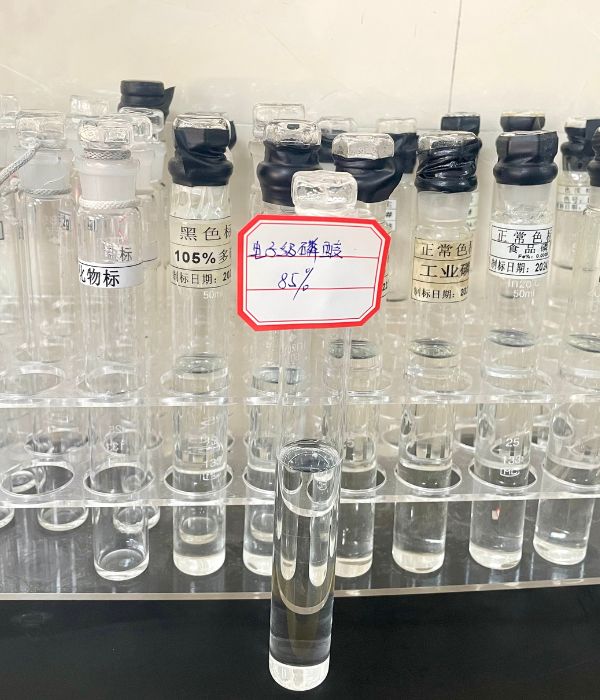
Phosphoric acid is a colorless, odorless, water-miscible liquid at room temperature (85% aqueous solution is the standard commercial concentration). It is a strong mineral acid with a sour, acidic taste.
Functional Profile
- Primary functions: Acidulant (tartness), pH control, flavoring
- Secondary functions: Metal ion sequestration (in acid systems)
- Key market fact: Phosphoric acid is the acidulant that defines the flavor profile of cola-type beverages — it is one of the most recognizable food ingredients in the world by function
FCC Specifications (Representative)
| Parameter | Specification |
|---|---|
| Assay (as H₃PO₄) | 85.0–88.0% |
| Arsenic | ≤ 1.3 mg/kg |
| Lead | ≤ 0.5 mg/kg |
| Cadmium | ≤ 0.1 mg/kg |
| Mercury | ≤ 1 mg/kg |
| Fluoride | ≤ 10 mg/kg |
Primary Applications
- Cola-type beverages: The signature tartness of Coca-Cola, Pepsi, and similar beverages
- Acidification of other beverages, including some fruit-flavored drinks and sports beverages
- Food processing: pH adjustment in various food manufacturing processes
- Nutritional supplements: Source of bioavailable phosphorus
Phosphate Blends — Why Single Phosphates Rarely Win Alone
For most commercial food processing applications, a blend of phosphates — combining two or more compounds to target multiple functional outcomes simultaneously — outperforms any single phosphate compound.
Common blend combinations:
| Blend | Typical Ratio | Application | Rationale |
|---|---|---|---|
| STPP + SAPP | 70:30 to 50:50 | Meat processing | STPP for water binding + SAPP for pH and color control |
| STPP + SHMP | 60:40 to 40:60 | Seafood processing | STPP for water binding + SHMP for color and metal chelation |
| SAPP + MCP | Variable | Baking powder | Controlled leavening release |
| SHMP + STPP | 40:60 | Surimi (fish paste) | Gel strength enhancement |
Why blends outperform singles:
- Multiple pH domains: Different phosphates dominate at different pH values. A blend provides functional coverage across the pH range encountered during processing and storage.
- Synergistic mechanisms: STPP raises pH to improve protein hydration; SHMP then chelates metals that would otherwise limit water binding — the two mechanisms complement each other.
- Solubility timing: Blends with different solubility rates can provide sequential functional effects throughout the processing cycle.
Goway Chemical produces application-specific phosphate blends for meat processing, seafood processing, and bakery applications. Contact our technical team to discuss your formulation requirements.
Section 4: Application Guide by Industry
This section provides detailed application guidance for the primary food industry segments that use food grade phosphates. For each industry, we cover the relevant phosphate compounds, typical usage levels, regulatory considerations, and practical tips.
Meat and Poultry Processing
Why phosphates matter in meat processing: Meat processing is the single largest commercial application for food grade phosphates globally. The water-binding function of STPP and related polyphosphates is so economically significant that the commercial viability of many processed meat products — from hot dogs to injected hams — depends on it.
The science is well-established: phosphates increase cooking yield by 2–8 percentage points in typical meat processing applications. For a high-volume sausage producer manufacturing 100,000 tonnes per year, a 3-point yield improvement represents approximately 3,000 additional tonnes of finished product — with no additional raw material cost.
How STPP Functions in Meat Systems
When STPP is added to a meat system:
- Dissolution: STPP dissolves in the meat’s moisture content and in any added brine or water.
- pH elevation: STPP raises the pH of the meat surface from ~5.5–5.8 toward the isoelectric point of the major myofibrillar proteins (pI ~5.4 for myosin, ~5.2 for actin). The net protein charge increases, causing the protein filaments to repel each other and expand.
- Ion exchange: STPP’s tripolyphosphate ions (P₃O₁₀⁵⁻) displace calcium and magnesium ions that would otherwise bridge adjacent protein filaments. This de-esterification of actomyosin reduces the stiffness of the protein matrix.
- Water entrapment: The expanded, charged protein matrix physically traps water molecules through hydrogen bonding and electrostatic interactions. This entrapped water does not readily escape during heating.
The result: a juicier, more tender product with higher cooking yield and improved texture.
Typical Formulations
Formulation 1: Standard cooked sausage (frankfurter)
| Ingredient | % (w/w) of finished product |
|---|---|
| Meat (beef/pork) | 65–75% |
| Fat | 15–25% |
| Ice/water (added) | 8–15% |
| STPP | 0.30–0.50% |
| Salt | 1.5–2.5% |
| Nitrite (cure) | 0.015% |
| spices | to taste |
STPP addition in the 0.30–0.50% range provides optimal water binding without perceptibly affecting flavor. Higher levels (above 0.75%) can produce a soapy or alkaline taste and may affect color development in cured products.
Formulation 2: Enhanced pork loin (injection)
| Ingredient | % (w/w) of finished product |
|---|---|
| Pork loin | 85–90% |
| Injection brine (25% pump) | |
| — Water | 75% |
| — Salt | 15% |
| — STPP | 3–5% (of brine weight) |
| — Sugar | 3–5% |
| — Carrageenan | 0.3–0.5% |
| — Nitrite | 0.05% |
Pump level: 25% of raw weight. Net STPP addition in finished product: approximately 0.3–0.5%.
Formulation 3: Turkey breast (tumbled)
| Ingredient | % (w/w) of finished product |
|---|---|
| Turkey breast | 88–93% |
| Tumble solution | |
| — Water | 60% |
| — Salt | 15% |
| — STPP + SAPP blend (60:40) | 4–6% (of solution) |
| — Sugar | 2–3% |
The STPP-SAPP blend provides both water binding (STPP) and improved color stability (SAPP’s pH effect on myoglobin).
Regulatory Considerations for Meat Applications
- USA (USDA/FSIS): 9 CFR 424.21 permits sodium phosphates at levels not exceeding 0.5% in finished meat products. STPP, SAPP, TSPP, and SHMP are all authorized. Combination use must not exceed the combined limit.
- EU: Maximum levels per food category are specified in Annex II to Regulation (EC) No 1333/2008. For most processed meat products, the maximum phosphate level is 5,000 mg/kg (expressed as P₂O₅). Note that EU limits include all phosphate sources — calculate total phosphate input from all ingredients.
- China (GB 2760-2024): Specific maximum levels are set by meat product category. For processed meat products, typical maximum phosphate usage levels are 5,000 mg/kg or less, expressed as phosphorus.
Common Problems and Troubleshooting
| Problem | Likely Cause | Solution |
|---|---|---|
| Greasy texture, fat separation | Insufficient STPP, inadequate emulsification | Increase STPP, add emulsifying phosphate (SAPP), ensure adequate chopping/mixing time |
| Soapy or alkaline flavor | Excessive STPP, particularly in high-pH systems | Reduce STPP level, check brine pH (target: 7.5–8.5 for brines), switch to SAPP blend |
| Poor color development in cured products | Excessive phosphate raising pH above optimal nitrosation range | Reduce phosphate, check pH (optimal cured color: pH 5.8–6.2), verify nitrite level |
| Excessive purge during storage | Insufficient water binding | Increase STPP, verify dissolution and distribution, check storage temperature |
| White precipitates on product surface | Undissolved phosphate crystals, hard water precipitation | Ensure complete STPP dissolution before adding to formulation; use deionized water for brines |
Seafood Processing
Why phosphates matter in seafood: Seafood is perishable, high-value, and highly sensitive to texture and appearance degradation. Phosphates address the two primary quality challenges in seafood processing: water loss during frozen storage and discoloration (particularly the dreaded “green spots” in shrimp).
The Green Spot Problem — SHMP’s Signature Application
“Green spots” in shrimp are caused by the reaction of hydrogen sulfide (H₂S) — naturally produced by bacterial reduction of sulfur-containing amino acids in shrimp — with copper ions in shrimp tissue. The resulting copper sulfide (CuS) is green-black and forms the characteristic spots.
The conventional solution — tetraphenylphosphonium chloride (TPPC) — is facing increasing regulatory scrutiny and bans in some markets. SHMP is the primary alternative, functioning by sequestering free copper ions before they can react with hydrogen sulfide.
SHMP’s high chelation capacity for copper and other heavy metals — across a broad pH range — makes it uniquely effective for this application. STPP is used alongside SHMP for water binding in shrimp and fish fillets.
Typical Formulations
Shrimp — tumbling/glazing
| Component | Level |
|---|---|
| SHMP (E452i) | 0.3–0.6% (w/w) of shrimp weight |
| STPP (E451i) | 0.2–0.4% |
| Salt | 1.5–2.5% |
| Water (for glazing solution) | As needed |
| Treatment temperature | 0–4°C |
| Tumble time | 20–40 minutes |
Net phosphate addition to finished product: approximately 0.5–1.0%.
Fish fillets — brining
| Component | % of brine |
|---|---|
| Water | 90–95% |
| Salt | 4–6% |
| SHMP | 0.5–1.5% |
| STPP | 0.2–0.5% |
| Sugar | 1–2% |
EU Compliance for Seafood
The EU has specific provisions regarding phosphate use in seafood products. Under Regulation (EC) No 1333/2008, the maximum level for total phosphates in fishery products (processed crustaceans and fish) is generally 5,000 mg/kg expressed as P₂O₅, though specific product standards may differ. The EU does not distinguish between naturally occurring phosphate in fish tissue and added phosphate — total phosphate must be within limits.
Your supplier should be able to provide documentation supporting the total phosphate level in your finished product, including a calculation based on the phosphate content of their product and your addition rate.
Bakery and Grain Processing
Phosphate use in bakery centers on leavening acidulants (primarily SAPP) and, to a lesser extent, on texture and dough conditioning effects.
The Chemistry of Phosphate Leavening
Baking powder consists of three components:
- Acidulant (SAPP or MCP) — provides acidity to react with the alkali
- Alkali (sodium bicarbonate, NaHCO₃) — the source of CO₂ gas
- Buffer/filler (usually starch) — stabilizes the dry mixture
The acid-base reaction: SAPP + 8 NaHCO₃ → 8 CO₂ + 6 H₂O + 3 Na₃PO₄ + Na₂HPO₄
SAPP’s reaction with bicarbonate is slower than MCP’s, which is why SAPP is classified as a “slow-acting” or “double-acting” leavening agent — some CO₂ is released during mixing, but the majority is released during baking.
SAPP Grades and Selection
Commercial SAPP is available in multiple particle size grades that control dissolution rate:
- FAP (Fast-Acting Powder): Very fine particle size, rapid dissolution, fast CO₂ release. Best for products where maximum gas is needed at the start of baking.
- MAP (Medium-Acting Powder): Intermediate dissolution rate. The most widely used general-purpose grade.
- SAP (Slow-Acting Powder): Larger particle size, slow dissolution, primary CO₂ release during baking. Used in products requiring extended oven spring.
For most commercial cake and cookie applications, a medium-acting grade (MAP) is the standard choice.
Typical Usage Levels
| Product | SAPP Level (% of flour) | Notes |
|---|---|---|
| Cake (high-ratio) | 1.0–2.0% | Requires fast-acting component (MCP) for maximum volume |
| Cookies | 0.3–0.8% | Lower levels for mild-tender cookies |
| Crackers | 0.2–0.5% | For texture and dough conditioning |
| Refrigerated dough | 0.5–1.0% | Requires SAP grade for controlled release |
Clean Label Considerations
The trend toward clean label products — foods with fewer, more recognizable ingredients — has created a challenge for phosphate-based leavening systems. Phosphates are industrial-sounding ingredients, and some premium and organic bakery brands have moved toward phosphate-free leavening systems using cream of tartar (potassium bitartrate) or other natural acidulants.
However, phosphate leavening remains the industry standard for commercial bakery applications where consistent gas release, shelf stability of dry mixes, and cost efficiency are priorities. Goway Chemical works with customers evaluating both traditional and clean-label formulations to identify the optimal approach for each market.
Dairy and Processed Cheese
Phosphates in dairy applications serve two primary functions: emulsification in processed cheese, and pH buffering in fermented dairy products.
Processed Cheese — The Emulsification Mechanism
Processed cheese is a heat-treated blend of natural cheese, dairy proteins, emulsifying salts (phosphates and citrates), and optional additional ingredients. Without emulsifying salts, processed cheese would melt unevenly — the fat would separate from the protein matrix, producing a greasy, stringy mess.
The mechanism: phosphates (primarily STPP, TSPP, and SAPP) function as emulsifying salts by:
- pH modification: Raising the pH from the natural cheese pH (~5.0) toward 5.5–6.0, where casein proteins have optimal swelling and emulsification capacity.
- Calcium sequestration: Removing calcium ions that would otherwise cross-link casein proteins, stiffening the matrix and preventing uniform melting.
- Protein modification: Partial proteolysis of casein by released proteolytic enzymes, which improves melt properties.
The result: a smooth, uniform, free-flowing melt when heated.
Typical phosphate levels in processed cheese:
- STPP: 1.5–3.0% (primary emulsifying phosphate)
- SAPP: 0.5–1.5% (for pH and texture adjustment)
- TSPP: 0.5–1.5% (for texture and melt control)
Phosphate blend optimization for processed cheese is highly application-specific. Goway’s technical team can provide formulation guidance based on your target cheese texture, melt profile, and regulatory jurisdiction.
Dairy pH Buffering
In fermented dairy products (yogurt, kefir, cultured dairy), phosphates function as buffering agents that help control acidification during fermentation, ensuring consistent texture and flavor development across batches.
Beverages and Liquid Foods
The primary phosphate used in beverages is phosphoric acid (E338) — most recognizably in cola-type beverages, where it provides the signature tart acidity that defines the flavor profile. Phosphoric acid also appears in some sports beverages, where phosphorus is positioned as a performance mineral.
SHMP in beverage clarification: In beer brewing and certain juice processing operations, SHMP is added as a clarifying agent — its strong sequestrant capacity precipitates haze-forming proteins and metallic ions, improving clarity and extending shelf life. Typical addition levels are low (50–200 mg/L), and the precipitate is removed during filtration.
Canned and Preserved Foods
In canned foods — particularly canned vegetables, canned beans, and canned seafood — phosphates provide multiple benefits:
- Texture preservation: Phosphate-treated vegetables maintain firmness during thermal processing
- Color protection: Sequestration of metal ions that catalyze chlorophyll degradation (green vegetables) and anthocyanin fading (colored vegetables)
- Nutrient retention: Reduced leaching of water-soluble nutrients during processing
Bean processing is a well-established application: SHMP addition to canning brines (approximately 0.1–0.3%) helps maintain bean firmness and prevent clumping and surface darkening during sterilization and storage.
Application Selection — Decision Matrix
| Industry | Primary Phosphate | Secondary | Typical Level | Key Function |
|---|---|---|---|---|
| Meat (sausages) | STPP | SAPP | 0.3–0.5% | Water binding |
| Meat (injected) | STPP | SAPP | 0.3–0.5% | Water binding, yield |
| Meat (cured) | STPP | SAPP | 0.2–0.4% | Water binding, color |
| Seafood (shrimp) | SHMP | STPP | 0.5–1.0% | Color, water binding |
| Seafood (fish) | SHMP | STPP | 0.3–0.5% | Water binding |
| Bakery (cakes) | SAPP | MCP | 0.5–2.0% | Leavening |
| Bakery (cookies) | SAPP | — | 0.1–0.5% | Texture, leavening |
| Processed cheese | STPP, TSPP | SAPP | 1.5–3.0% | Emulsification |
| Dairy (fermented) | SAPP | STPP | 0.05–0.2% | pH buffering |
| Beverages (cola) | Phosphoric acid | — | Variable | Acidulation |
| Canned vegetables | SHMP | STPP | 0.1–0.3% | Texture, color |
Section 5: How to Select the Right Food Grade Phosphate Supplier
With a chemistry foundation now established, this section provides a practical framework for evaluating and selecting food grade phosphate suppliers — grounded in the quality, regulatory, commercial, and technical criteria that determine whether a supplier relationship will be a strategic asset or a recurring problem.
This framework draws on the six-criteria supplier evaluation methodology developed in GW-2026-003 (How to Choose a Reliable Phosphate Supplier). For the food grade phosphate context, we have added the food-specific regulatory dimension.
Dimension 1: Regulatory Compliance Capability
The question: Does your supplier have the regulatory infrastructure to support your market access across all your target jurisdictions?
What to verify:
- FCC compliance: Request COA data demonstrating FCC monograph compliance across a minimum of three recent batches. COA should include heavy metals (lead, arsenic, cadmium, mercury) testing results — not just the specification, but the actual reported values.
- Market-specific certifications:
- EU market: Does the supplier hold FAMI-QS (for feed) and can they provide REACH registration documentation for your target CAS numbers?
- Halal market: Is their Halal certificate issued by an accredited certification body recognized in your target markets?
- Kosher market: Is their Kosher certificate issued by a recognized certification authority?
- Chinese domestic market: Does the supplier hold a valid SC (Food Production License) covering the specific phosphate products you are sourcing?
- Documentation integrity: Be alert to COA data that appears templated without batch-specific values — a credible supplier provides actual analytical results for each shipment.
Dimension 2: Quality Consistency — Batch-to-Batch Reliability
The question: Will every shipment perform consistently, or will formulation adjustments be required every time you receive a new batch?
What to verify:
- COA with every shipment: A credible supplier provides batch-specific COA with actual test results — not interpolated values, not averaged data. This is non-negotiable for food grade applications.
- Specification consistency: Request COA for the last three shipments and compare reported values for key parameters (pH, assay, heavy metals). The coefficient of variation for physical parameters should be low.
- Heavy metals testing: For food applications, heavy metals are a critical quality parameter. Verify that every COA includes testing data for lead, arsenic, cadmium, and mercury — not just a statement that the product “meets FCC specifications.”
- Traceability: Ask the supplier about their traceability system. From which raw material shipment was this batch produced? Can they trace back to source within 24 hours?
Goway’s commitment: Every Goway food grade phosphate shipment is accompanied by a batch-specific COA generated from actual production testing. COA turnaround is the same day as batch release. Retention samples are maintained for a minimum of 24 months.
Dimension 3: Supply Capacity and Production Scale
The question: Can this supplier support your volume requirements at consistent quality — today and as your business grows?
What to verify:
- Annual production capacity: A 20,000-tonne-per-year supplier cannot reliably serve a customer requiring 5,000 tonnes per year in a single shipment — production scheduling conflicts will create delivery delays.
- Capacity utilization: High utilization (>85%) in a single-site operation creates delivery risk during maintenance shutdowns or production disruptions. Verify whether the supplier has multiple production lines or sites.
- Safety stock policy: Does the supplier maintain finished goods inventory for fast-moving product grades, or is everything produced to order?
- Supply continuity track record: Request references from customers with similar volume requirements to your business.
Why scale matters for food grade: Food grade phosphate production requires dedicated equipment, rigorous cleaning protocols, and quality testing that add cost to production. Suppliers who operate food grade production alongside industrial grade production must demonstrate that cross-contamination controls are in place. Goway operates dedicated food grade production capacity, physically and procedurally separated from industrial grade operations.
Dimension 4: Technical Support and Application Expertise
The question: Does this supplier understand how their product performs in your specific application — and are they willing to share that knowledge?
What to verify:
- Application formulation support: Can the supplier provide starting-point formulations for your specific application, including recommended addition levels, mixing procedures, and troubleshooting guidance?
- Technical documentation quality: Compare the technical sophistication of their SDS, TDS, and COA documentation. A credible supplier’s documentation should demonstrate genuine technical depth, not generic templates.
- Responsiveness: Test their response time and quality by sending a technical inquiry. How long does it take to receive a substantive response? Is it from a technical specialist or a sales coordinator reading from a script?
- Custom blending capability: Can they formulate phosphate blends optimized for your specific application, or are you restricted to standard catalog products?
Dimension 5: Documentation and Traceability Systems
The question: Can this supplier provide the documentation package your regulatory and QA teams actually need — in the format and timeframe required?
What to evaluate:
- Standard documentation package — what is included with every shipment:
- Batch-specific COA with actual test results
- SDS in required regional format (EU REACH Annex II, US HazCom 2012, or international GHS)
- TDS with complete physical and chemical specifications
- Qualification documentation — for supplier qualification programs:
- FCC compliance statement
- ISO 9001:2015 certificate
- FAMI-QS certificate (for feed applications)
- Halal and/or Kosher certificates
- REACH registration documentation (for EU market)
- Response time: Standard documentation requests should be fulfilled within one business day. Qualification packages including third-party test reports should be available within 2–3 business days.
Food Grade Phosphate Supplier Evaluation Checklist
Use this checklist as a structured tool for supplier qualification:
Regulatory Compliance
- [ ] COA for last 3 batches showing actual test values (not interpolated)
- [ ] FCC compliance confirmed for target phosphate compounds
- [ ] REACH registration documentation available (for EU export)
- [ ] Halal certificate from accredited body (for Halal market)
- [ ] Kosher certificate from recognized authority (for Kosher market)
- [ ] SC license confirmed (for China domestic market)
- [ ] Heavy metals (Pb, As, Cd, Hg) testing data in COA
Quality Consistency
- [ ] Batch-specific COA provided with every shipment
- [ ] Heavy metals data on every COA
- [ ] Retention sample policy confirmed
- [ ] Traceability system documented
- [ ] Minimum 3-batch specification consistency verified
Supply and Capacity
- [ ] Annual capacity confirmed and adequate for your requirements
- [ ] Food grade production dedicated or adequately segregated from industrial grade
- [ ] Safety stock policy confirmed
- [ ] Delivery lead time confirmed and acceptable
Technical Capability
- [ ] Technical documentation (TDS) provided for all target products
- [ ] Application formulation support available
- [ ] Custom blending capability confirmed
- [ ] Technical inquiry response time acceptable (< 1 business day)
Documentation Systems
- [ ] SDS in all required regional formats available
- [ ] Halal/Kosher certificates in required formats available
- [ ] Documentation package turnaround ≤ 1 business day (standard)
- [ ] Third-party test reports available within 2–3 business days
Section 6: Documentation and Compliance — What Your Supplier Should Provide
This section details the documentation that a credible food grade phosphate supplier should be able to provide, organized by market and document type.
Standard Documentation Package
Every food grade phosphate shipment should be accompanied by:
Certificate of Analysis (COA)
The COA is the primary quality document for any food ingredient shipment. A credible COA includes:
- Supplier name and address
- Product name and grade
- Batch number and production date
- Lot traceability information
- Actual analytical results (not just pass/fail statements) for all specification parameters
- Test methods referenced
- Name and signature of quality control responsible person
- Heavy metals testing results (lead, arsenic, cadmium, mercury) — explicitly verified
Beware of COA templates that show only specification limits without actual values. A COA is only meaningful if it shows what was actually measured.
Safety Data Sheet (SDS)
The SDS is the regulatory document governing hazard communication. Required formats depend on your market:
- EU (REACH Annex II): EU-format SDS with 16 sections, including EU-specific exposure scenario information
- United States (OSHA HazCom 2012): US-format SDS with 16 sections under the GHS framework
- International (GHS): For all other markets, an English-language GHS-format SDS is standard
Technical Data Sheet (TDS)
The TDS provides non-regulatory product specification information — physical form, chemical composition, solubility data, typical applications, storage conditions, and shelf life. The TDS complements the COA (which focuses on batch-specific test results) with baseline product information.
Market-Specific Compliance Documents
For EU Market
- REACH registration documentation: Substance-specific registration numbers under ECHA, covering the CAS numbers you are sourcing. Ask for the REACH registration number (EC/REACH registration number) and confirm it covers your specific substance.
- E-number compliance documentation: For food additive use, EU buyers may require documentation confirming that the phosphate is listed under the relevant E-number category in Regulation (EC) No 1333/2008.
- EU 231/2012 purity compliance: Statement confirming that the product meets the purity specifications of Commission Regulation (EU) No 231/2012.
For US Market
- FCC compliance statement: Declaration that the product meets the relevant FCC monograph specifications.
- FDA food contact compliance: Where applicable, confirmation of regulatory status under 21 CFR.
- GRAS status: For food uses under FDA jurisdiction, a GRAS affirmation letter or self-affirmed GRAS documentation.
For China Domestic Market
- GB standard compliance: Declaration of compliance with applicable GB standards (GB 2760-2024 for food additive use; GB 2762-2022 for contaminant limits).
- SC license: Documentation confirming the supplier holds a valid Food Production License covering the specific phosphate product categories.
- Chinese-language documentation: For domestic Chinese customers, documentation in Chinese language as required by market regulation.
Third-Party Testing and Verification
A credible food grade phosphate supplier should be able to provide — upon request or as part of a qualification package — test reports from independent, accredited third-party laboratories. Relevant third-party testing includes:
- ICP-MS or ICP-OES heavy metals analysis (lead, arsenic, cadmium, mercury, copper, iron, etc.)
- Microbiological testing (total plate count, coliforms, E. coli, salmonella — particularly relevant for powder products)
- Halal/Kosher verification by accredited religious certification bodies
- FCC purity testing by independent laboratories
The gold standard for third-party testing is an accredited laboratory (ISO 17025 certification) — this is the internationally recognized standard for testing and calibration laboratory competence. Test reports from ISO 17025-accredited laboratories carry the highest regulatory and customer acceptance globally.
Frequently Asked Questions
Q1: What is the difference between food grade and technical or industrial grade phosphates?
Food grade phosphates are produced to strict purity specifications (typically FCC, EU 231/2012, or equivalent national standards) that limit heavy metals, toxic elements, and other contaminants to levels safe for human consumption. Technical or industrial grade phosphates are produced for industrial uses — water treatment, detergent manufacturing, metal finishing — where purity standards are less stringent and contaminant limits are higher. Using industrial grade phosphates in food is illegal in virtually all regulated markets and poses significant food safety risk. Always verify that your supplier’s product is specifically designated as food grade and request COA documentation confirming compliance with food purity standards.
Q2: Can food grade phosphates be used in organic food production?
The use of phosphates in organic food production is restricted by most organic certification standards. The USDA National Organic Program (NOP) regulations do not include phosphates on the National List of Allowed and Prohibited Substances for organic food processing — meaning conventional phosphates are generally prohibited in certified organic products in the US market. EU organic standards similarly restrict the use of food additives. If you are producing organic-labeled products, consult your organic certification body for the specific requirements in your market before selecting a phosphate supplier.
Q3: What is the maximum usage level for phosphates in processed meat?
Maximum usage levels depend on your target market’s regulations. In the United States, USDA/FSIS regulations (9 CFR 424.21) permit sodium phosphate addition at up to 0.5% of the finished meat product weight. In the European Union, the maximum level for total phosphates in most processed meat products is 5,000 mg/kg (expressed as P₂O₅), per Annex II to Regulation (EC) No 1333/2008 — and this limit applies to total phosphate from all sources, including phosphate naturally present in the meat. In China, GB 2760-2024 sets product-specific maximum levels. Functionally, the optimal water binding effect for most meat applications occurs at 0.30–0.50% phosphate addition — below the regulatory maximum in virtually all jurisdictions. Consult your regulatory advisor for jurisdiction-specific compliance requirements.
Q4: How do phosphates affect clean label initiatives?
The clean label movement — driven by consumer demand for simpler, more recognizable ingredient lists — presents a genuine tension with phosphate use in processed foods. Phosphates are industrial-sounding ingredients, and their removal or reduction is a stated goal of some clean label reformulation initiatives. In practice, this tension is managed in several ways:
- Dose optimization: Many products use more phosphate than functionally necessary. Reformulation to the minimum effective dose (often 0.20–0.30% for water binding) can reduce the ingredient’s prominence on the label while retaining functional benefit.
- Labeling language: Phosphates can be declared by their common or usual name (“sodium tripolyphosphate”) rather than E-numbers, which some brands prefer for consumer-facing labels.
- Natural alternatives: For some applications, natural alternatives (such as beet extract for color stability, or tapioca/cassava starch for texture) can partially replace phosphate functions, though with functional trade-offs.
- Market-specific strategies: A product reformulated for clean-label positioning in the premium retail market may not be appropriate for the value-added foodservice sector, where phosphate-based formulations remain the industry standard.
Goway Chemical’s technical team works with customers navigating clean label reformulation to identify the optimal balance between functional performance and label simplicity for each market segment.
Q5: What is the shelf life of food grade phosphates?
Food grade phosphates are stable chemical compounds with no inherent expiration date when stored properly. The practical shelf life is determined by:
- Physical stability: Phosphates (particularly STPP and SAPP) are hygroscopic — they absorb moisture from humid air, which can lead to caking and reduced free-flowing properties over extended storage. Storage in airtight containers in a cool, dry environment (relative humidity < 50%) extends shelf life significantly.
- Regulatory dating: Some markets and customers require a defined shelf life for food ingredient products. Goway Chemical provides food grade phosphates with a recommended shelf life of 24 months from production date when stored in original sealed packaging under recommended conditions.
For seafood and meat tumbling applications where phosphate dissolution rate is critical, the physical free-flowing properties of the phosphate should be verified before use if the product has been stored for an extended period.
Q6: How should I calculate phosphate dosage for my specific application?
Phosphate dosage calculations should begin with your target finished product specification — specifically the maximum permitted phosphate level under your target market’s regulations (see the regulatory section for specifics) and your desired functional outcome.
Step 1: Define your maximum level
Check the applicable regulation for your target market and product category. Use the lower of the regulatory maximum and your functional requirement.
Step 2: Account for process losses
In tumbling or injection applications, not all added phosphate is retained in the finished product. Retention rates vary by process:
- Direct addition (dry blending): ~100% retention
- Tumbling/injection: 60–85% retention (depending on process parameters)
- Brine injection: Calculate net retention based on pump percentage and retained pick-up percentage
Step 3: Calculate addition level
Net addition = Target finished product level / Retention rate
Example: Target 0.35% phosphate in finished sausage, tumbling process with 75% retention:
Required addition = 0.35% / 0.75 = 0.47% of finished product weight
Step 4: Verify regulatory compliance
Calculate the total phosphate input from all phosphate sources in your formulation (including phosphates in ingredient premixes, seasoning blends, and any phosphate added as a processing aid) and confirm the total is within the applicable regulatory limit.
Q7: What certifications should I look for in a food grade phosphate supplier?
For food grade phosphate applications serving global markets, the following certifications and standards are most relevant:
- Food Chemicals Codex (FCC): The primary purity standard for food grade chemicals. COA should demonstrate FCC compliance.
- ISO 9001:2015: Quality management system certification — indicates a documented, systematic approach to quality management.
- Halal Certification: Required for supply into Halal-certifying markets (Middle East, Southeast Asia, growing in Europe and North America). Issued by an accredited Halal certification body.
- Kosher Certification: Required or valued in Kosher-observing markets. Issued by a recognized Kosher certification authority.
- FAMI-QS: For feed grade phosphate applications — the European feed additive quality system.
- ISO 17025 (for testing laboratories): Confirms that third-party test reports come from an accredited laboratory.
Q8: Can Goway provide samples for testing before bulk orders?
Yes. Goway Chemical provides product samples for application testing and supplier qualification purposes. Sample requests are typically fulfilled within 2–3 business days. For formal supplier qualification programs, we also provide a complete qualification documentation package including COA samples, SDS, TDS, certificate copies, and relevant regulatory compliance statements.
Contact our sales or technical team through our documentation request form to initiate the sample or qualification process. Standard response time for sample requests is within one business day.
Ready to Source Food Grade Phosphates from a Verified Supplier?
Goway Chemical’s food grade phosphate portfolio covers the full range of sodium, calcium, and potassium phosphates used in food processing — including STPP, SAPP, SHMP, TSPP, TCP, and food grade phosphoric acid — with FCC/ISO 9001/Halal/Kosher certification coverage across all major food grade product lines.
Our production capacity of 200,000+ metric tons per year and dedicated food grade quality management system support consistent, scalable supply for food processors across North America, Europe, Southeast Asia, the Middle East, and China.
For product specifications and COA samples:
For qualification documentation and regulatory compliance support:
For a comprehensive resource covering global regulations, application formulas, and supplier evaluation:
Read the Full Food Grade Phosphates Deep Guide on GowayChemical.com →
Page maintained by Goway Chemical Technical & Commercial Team Last reviewed: April 2026 | Regulatory information current as of April 2026